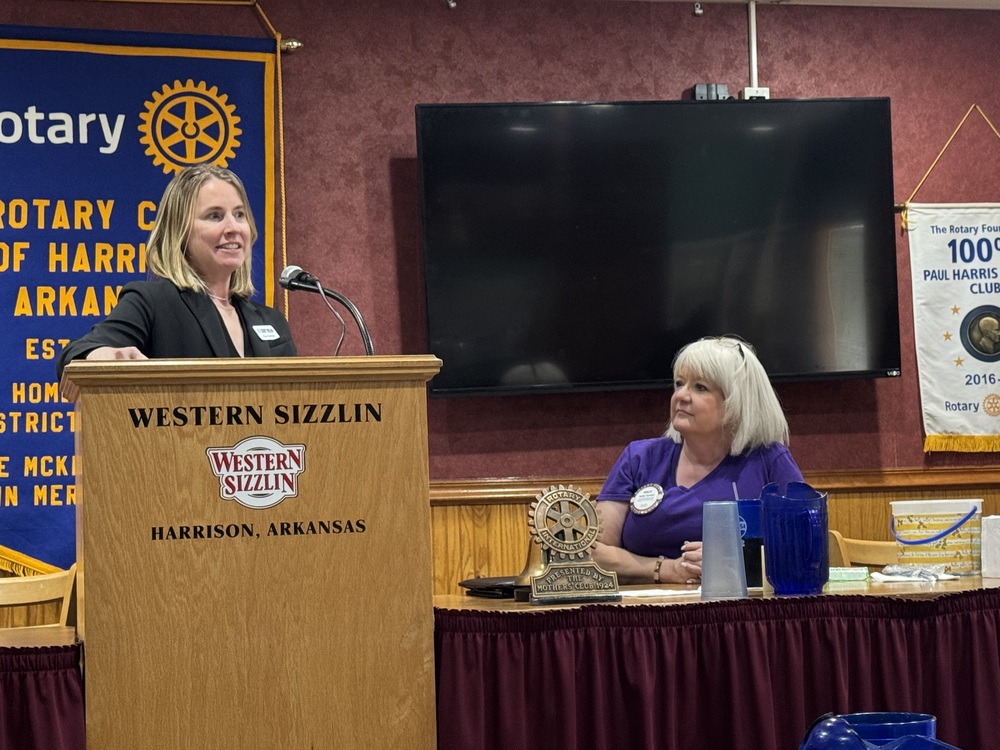
Cara Tolentino, vice president of business development for Surf Air Mobility, the parent company of Southern Airways Express, spoke to the Harrison Rotary Club on Thursday, Sept. 24. Southern operates 18 flights a week out of Harrison and completed 100% of its scheduled flights this summer. "We had a great summer, and we are ready for winter, too," she said.
Tolentino credited that reliability to Surf Air Mobility's SurfOS software, which now manages Southern's crew scheduling, dispatch, and maintenance records and was approved by the FAA as an official system of record in August, along with a new, highly experienced leadership team.
Tolentino shared how Southern is committed to placing sixty cents of every EAS subsidy dollar back into the community. “This means we purchase fuel here, we house our pilots here, and we love to participate in community fundraisers. We are committed to the communities we serve, and I’ll be honest, Harrison is one of our favorites.”
Southern is looking to the future and has partnered with BETA Technologies, which began electric cargo demonstration flights in Hawaii this summer. Southern plans to offer electric passenger service once the aircraft is certified.
She said electric commuter planes offer many benefits. They are quieter, lower operating cost, and zero emissions in flight.
She mentioned the great interline agreement Southern has with American Airlines, United, Japan Airlines, Alaska Air and Hawaiian Airlines. “You can book a ticket from Harrison to anywhere in the world from the American Airlines website, and your luggage is ticketed to your destination.”
The airport manager, Judy McCutcheon, reminded the group that the lower ticket prices Southern offers come from Essential Air Service (EAS) funding through the federal Department of Transportation (DOT). They are reimbursed for providing air service to rural communities. The EAS money comes from the overflight fees that international flights pay to use the United States' airspace plus Congressional appropriations.
Tolentino noted that the DOT caps the carrier's margin on EAS service at about 5%, and most of each subsidy dollar is spent operating the service, much of it right here in Harrison. Tolentino said. "We do this because we love aviation and the communities we serve."