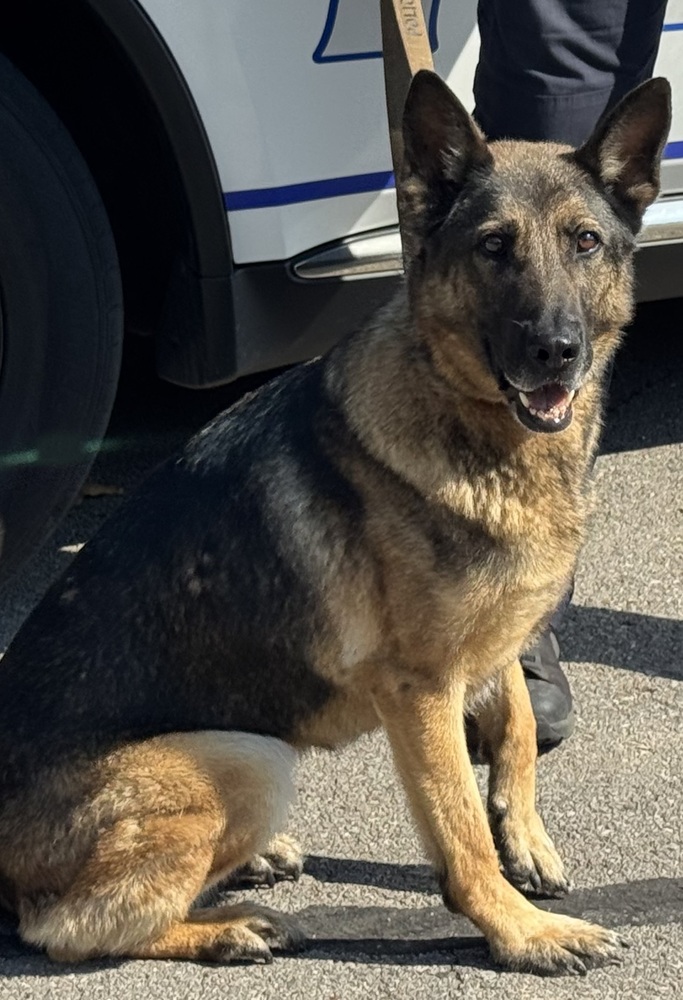
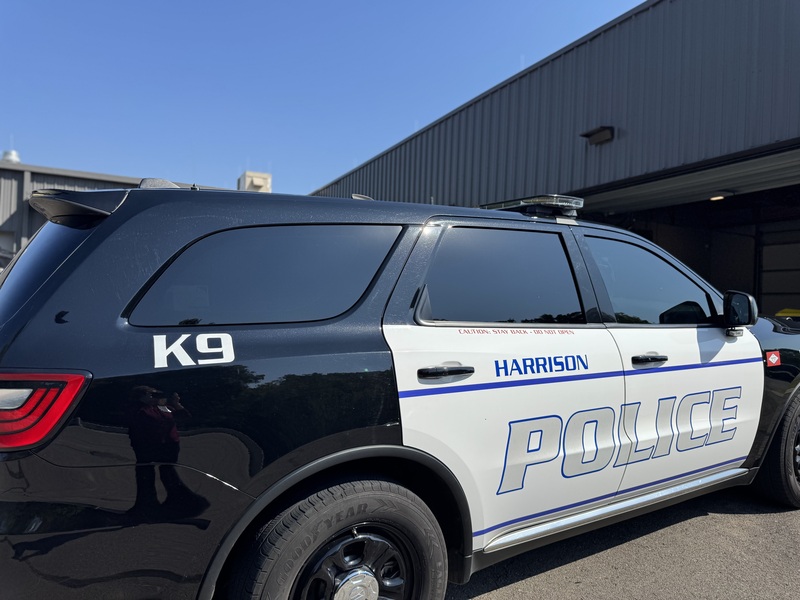
K9 Officer Jessie recently joined the Harrison Police Department thanks to a grant from www.k9s.org.
“We are very grateful to K9s.org for Jessie. We also received generous local donations from Equity Bank and Arvest Bank for her outdoor and car kennels,” her partner, Cpl. Hunter Brantley, said.
Jessie’s previous handler was a School Resource Officer in Texas. Brantley said, “Often the dogs don’t adapt to a new handler very well, but K9s.org determined Jessie was a good candidate to transition to a new handler.”
Jessie is a four-year-old German Shepherd. All of the Harrison K9’s are bilingual and accept commands in a foreign language from their handler. She is currently not trained to apprehend, but to smell drugs. She will attend a “tracking” class soon and can help find lost individuals, especially children or senior citizens.
Brantley said the public may not understand that K9s love to work. They know when it’s time to go to work, and she is ready. While standing outside the car speaking to Officer Brantley, Jessie was still inside the police car. He was asked if she was watching the other officer hide the drug-scented item. He said, “No. More than likely, she has her eyes glued on me. She knows I have the leash in my hand, and that means get ready to work. So she is watching for my commands and is excited to go to work.”
When Brantley opened the door, Jessie let him attach the leash, then immediately jumped out and started sniffing the area. She quickly covered the ground and corners of the “Sally Port,” where officers unload arrested individuals.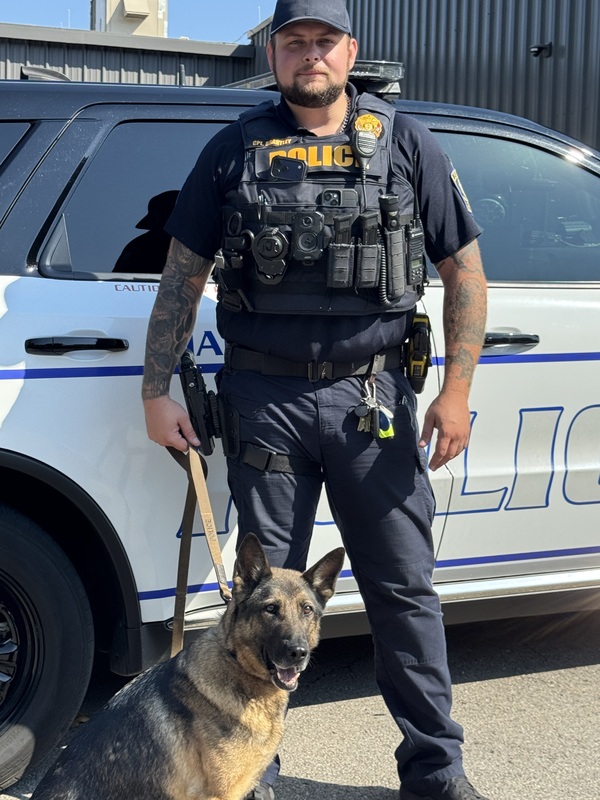
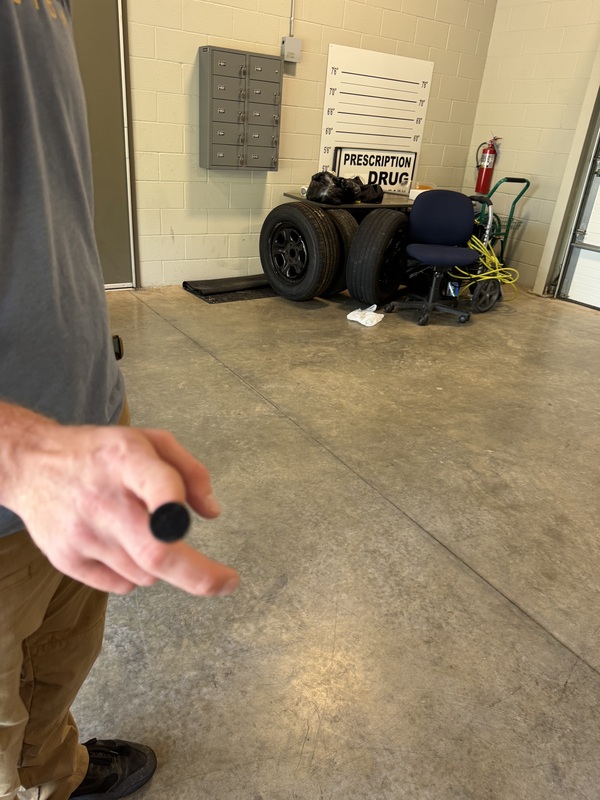
 It wasn’t long before she discovered the scent of drugs hiding in the locker area where officers lock up their weapons before escorting a prisoner into the station. The “drugs” she discovered were actually a Velcro tab that had the odor of narcotics embedded in it.
After taking her sitting-and-pointing stance, she stayed perfectly still and didn't take her eyes off the area of the smell. Her “reward” for doing her job well was seeing her toy “magically” appear for her to play with.
The Law Enforcement industry requires the K9 unit to train at least 16 hours a month. The officers said they often train far more than the minimum to teach the dogs new skills and keep the dogs active doing what they love. Other K9 units in the region often train together, so their own handler doesn’t hide the object they are searching for. Brantley said, “No matter how hard you work at not giving away a location, the dogs are so smart, they pick up on any hesitation or hidden tell that gives away the location from their own handler. They know their handler very well.”
The K9 officers plan to participate in some fundraising activities where the public can see demonstrations of the dogs’ abilities. Some of the dogs are sociable, and some are not. If you see an officer with their dog on a leash, it is best not to approach them because the dog is in work mode. Wait until the officer invites you closer. The department has posters and stickers with the dogs’ pictures and information. They are thrilled to share them with the public. But wait until they invite you closer.
“It’s important to remember these highly trained animals are not pets. They are working officers who love doing their job. They love the reward of their favorite toy when they are successful,” Brantley said.
Jessie was given to the Harrison Police Department by www.k9s.org. The non-profit organization raises funds so no community has to go without the additional protection of a trained K9. She is the first Arkansas placement for K9s.org. Their website states, “Since 2011, K9s have seized over $8 billion in contraband, located missing persons, helped solve arson cases, confiscated illegal weapons, and ensured public safety.” @k9sorg #Ms. Goodwin